
Anki vs. Quizlet vs. RemNote: The Ultimate Flashcard Showdown for Students
If you're in college or studying for a big exam, you've probably heard of the "flashcard wars." Anki, Quizlet, RemNote... Each app has its die-hard fans, and picking one can be a mess.
But which one is the best for you? The answer isn't just about features, but about friction: the effort it takes to use it every day. Because the best app is the one you actually use, not the one you ditch after two weeks.
In this post, we're going to break down the big three without beating around the bush, focusing on what really matters: ease of use, their algorithms, and how much they'll cost you in time and money.
Anki: The King of Spaced Repetition (with Some Fine Print)
Anki is a legend, especially in communities like #MedTwitter. Its power lies in its spaced repetition system (SRS) algorithm, which is, without a doubt, the most powerful and customizable one out there. It shows you each card right before you're about to forget it. Pure science for your brain.
But here's where the friction comes in. Anki isn't exactly "user-friendly." Its desktop interface looks like it's straight out of 2005, and getting started requires patience, watching a few tutorials, and understanding how "add-ons" work to get the most out of it. It's like a race car: incredibly powerful, but you have to learn how to drive it.
Best for: Students in memorization-heavy fields (Medicine, Law, languages) who aren't afraid of a learning curve in exchange for the best algorithm.
- Mobile app price: Free on Android, but get your wallet ready for iOS (around €25, one-time payment).
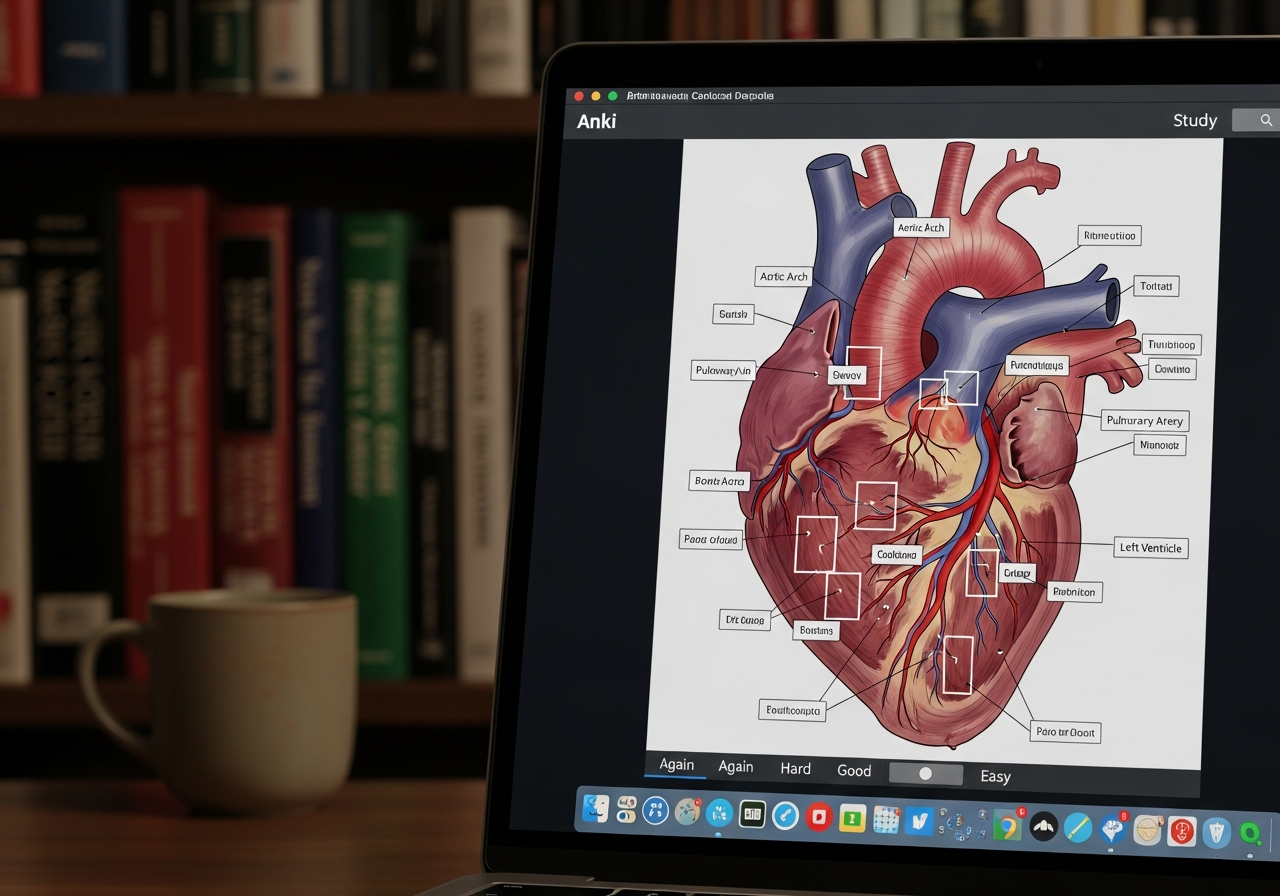
- Images and Image Occlusion: Yes, and it's their strongest feature. Image occlusion (being able to cover parts of an image to recall them) is an awesome feature for anatomy or concept maps.
- Works offline: Yes, no problem.
Quizlet: The Simplicity That Wins Everyone Over
Quizlet is the complete opposite of Anki. It's super easy to use, intuitive, and has a modern, pleasant interface. In five minutes, you can be creating your own cards or, even better, using decks created by millions of other students.
Its weak point is, precisely, its algorithm. Although it has a "Learn Mode" that resembles spaced repetition, it's not as rigorous or adaptable as Anki's. Many advanced users complain that it's too simple for long-term learning. Plus, many of its most interesting features, like offline studying or customizing study modes, are locked behind the Quizlet Plus subscription.
Best for: Students who need a quick and easy tool for specific exams, vocabulary, or reviewing concepts without overcomplicating things.
- Mobile app price: Free (with ads and limitations). The Quizlet Plus subscription unlocks its full potential.
- Images and Image Occlusion: You can add images (in the Plus version), but it doesn't have image occlusion.
- Works offline: Only with the paid subscription.
Wait a Minute, What If You Don't Have Time to Create Flashcards?
Tanto Anki como Quizlet exigen que inviertas tiempo en crear tus tarjetas. Es un proceso útil, pero seamos sinceros, no siempre tenemos horas para hacerlo. Las flashcards son una forma de active recall, pero no la única.
Smartests.app offers an alternative: it turns your notes into multiple-choice quizzes in seconds. You upload your PDF or paste your text, and the AI generates questions so you can test yourself immediately. It's another way to practice active recall, but without the friction of creating study materials.
RemNote: The Digital Brain That Unites Notes and Flashcards
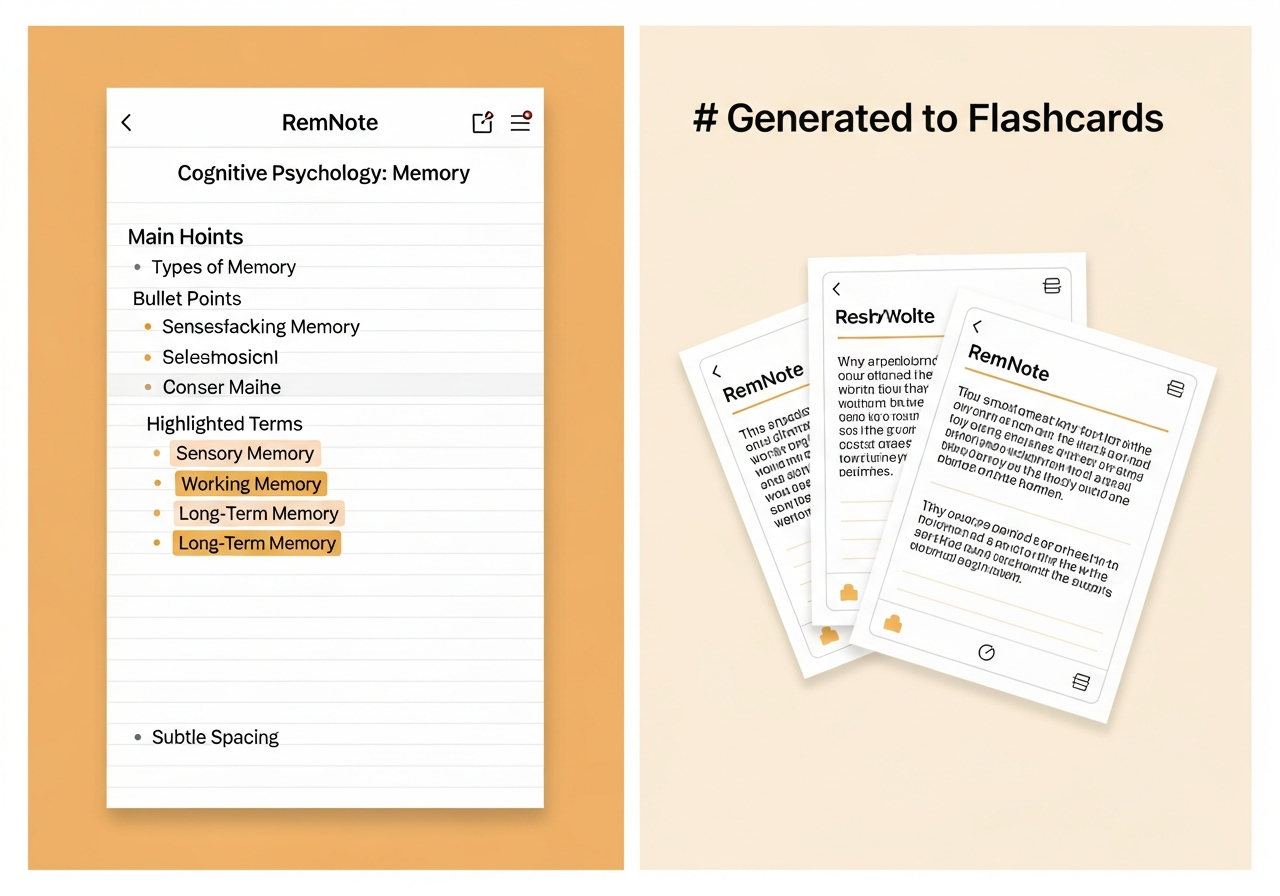
RemNote is different. It's not just a flashcard app; it's a knowledge management tool. The idea is that you can take notes and create flashcards at the same time, in the same place. You write your notes and, with a simple syntax (for example, ::), you turn a sentence into a card.
This integration is its biggest advantage. Everything is connected, allowing you to create a "second brain" where your ideas, notes, and review cards coexist. The friction here is understanding its philosophy. If you're just looking to make simple flashcards, you might feel overwhelmed by all its organizational features (portals, references, etc.).
Best for: Students who like to have everything organized in one place, take digital notes, and want to connect complex ideas.
- Mobile app price: Freemium model. The free version is very comprehensive, but the paid one offers advanced features.
- Images and Image Occlusion: Yes, both features are available and well-integrated.
- Works offline: Only in the Pro desktop app version.
Quick Summary: Which One Should I Choose?
Let's get straight to the point. Here's a summary to help you decide in 30 seconds:
- Use Anki if: You value the algorithm above all else, are studying a pure memorization field like Medicine, and don't mind investing time to learn an ugly but ultra-powerful tool.
- Use Quizlet if: You want something that works instantly, is easy to use, has a nice interface, and is perfect for studying for an exam next week. You accept that its algorithm is more basic.
- Use RemNote if: You want your notes and flashcards to live in the same place. You like organizing and connecting ideas and don't mind learning a new system to have a "second brain" for studying.
In the end, there's no perfect answer. The important thing is to understand the cost (in time and money) of each one and choose the one that creates the least friction in your day-to-day life.
Forget Creating Flashcards, Make Quizzes Instead
Flashcards are great, but they're just one more tool. The ultimate goal is to actively test your knowledge.
If the idea of spending hours creating cards overwhelms you, remember there are other ways. With Smartests.app, you can upload your notes and have a multiple-choice quiz ready to practice in seconds. Less time organizing, more time actually studying.