
Best 3D Anatomy Atlases: Are They Worth Paying For?
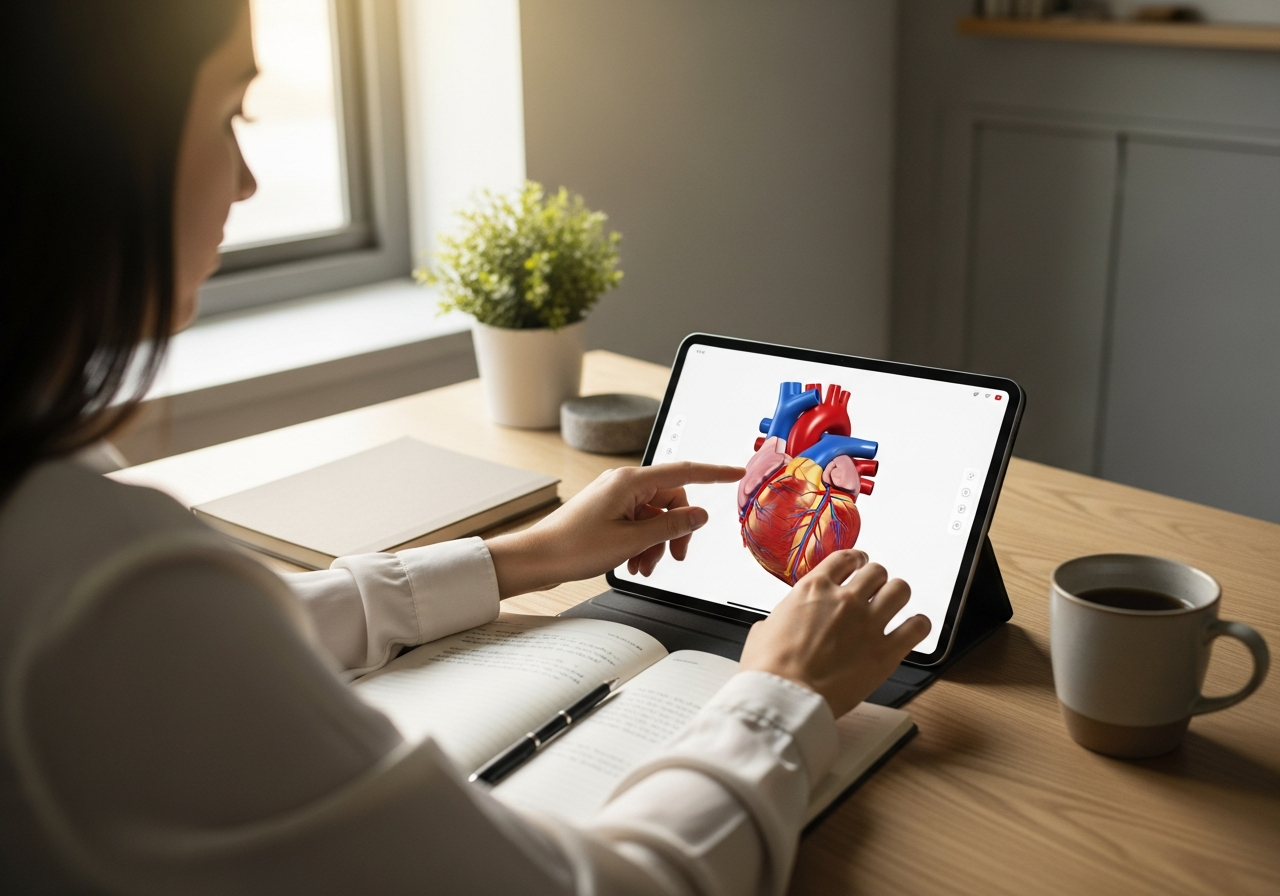
Let's be honest: studying anatomy is a tough bone to chew, no pun intended. Memorizing every muscle, nerve, and blood vessel from a textbook with flat images is like trying to learn to drive by watching cartoons. It's possible, but it's not ideal.
Luckily, we live in an age where technology gives us a helping hand. 3D anatomy atlases for tablets and computers have changed the game. They let you rotate, dissect, and explore the human body in a way that was previously unthinkable outside of a dissection lab.
But here comes the big question: with so many options, which one should you choose? And most importantly, is it worth shelling out for a paid app when there are free alternatives? Let's break it down.
The Two Giants of 3D Anatomy: Complete Anatomy vs. Human Anatomy Atlas
If you've searched for "the best anatomy app," these two names have surely popped up. They're like the Real Madrid and Barça of digital atlases. Both are incredibly powerful, but they have different philosophies.
Complete Anatomy 2024 (from Elsevier)
Think of Complete Anatomy as the "academic" of the group. It's a tool with brutal depth, developed by 3D4Medical and now owned by the publishing giant Elsevier.
The good:
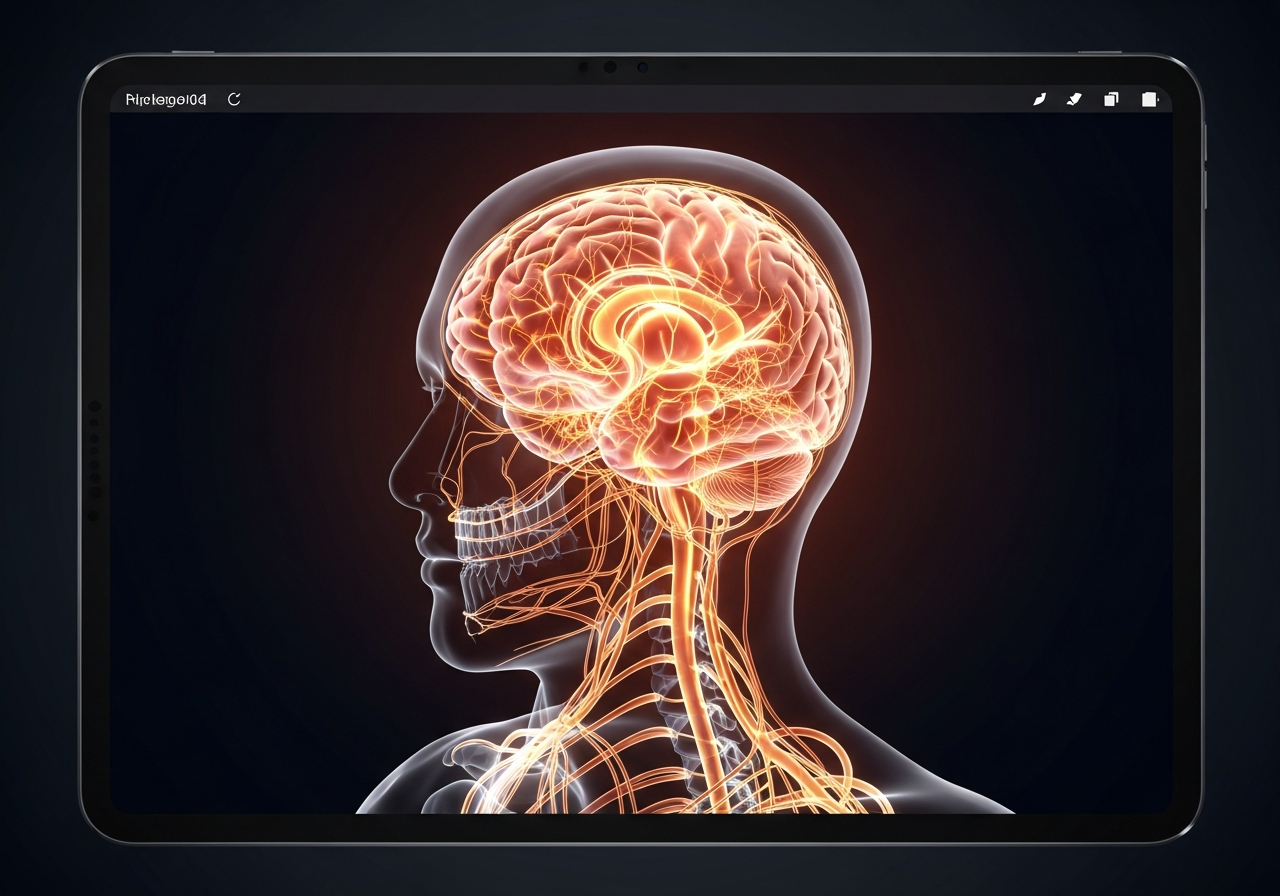
- Extreme level of detail: If microanatomy is your thing, you'll be blown away. You can explore layers of tissue, histology, and see models at a cellular level. It's perfect if you need very, very deep knowledge.
- Quality extra content: It's not just a 3D model. It includes thousands of clinical videos, complete courses on specific topics (taught by experts), and muscle movement animations that are simply amazing.
- Modern interface: It's very polished and pleasant to use. You can tell they've put a lot of care into the user experience.
The not-so-good:
- The price: Its model is an annual subscription. This means you pay every year to maintain access. For a student, this can be a significant recurring expense.
- Focus on renders: The 3D models are spectacular and ultra-detailed, but its strong suit isn't direct comparison with real cadaver images.
Human Anatomy Atlas 2024 (from Visible Body)
If Complete Anatomy is the academic, Human Anatomy Atlas is the "clinician." Its approach is designed to connect the ideal model with the real world of a hospital or a dissection lab.
The good:
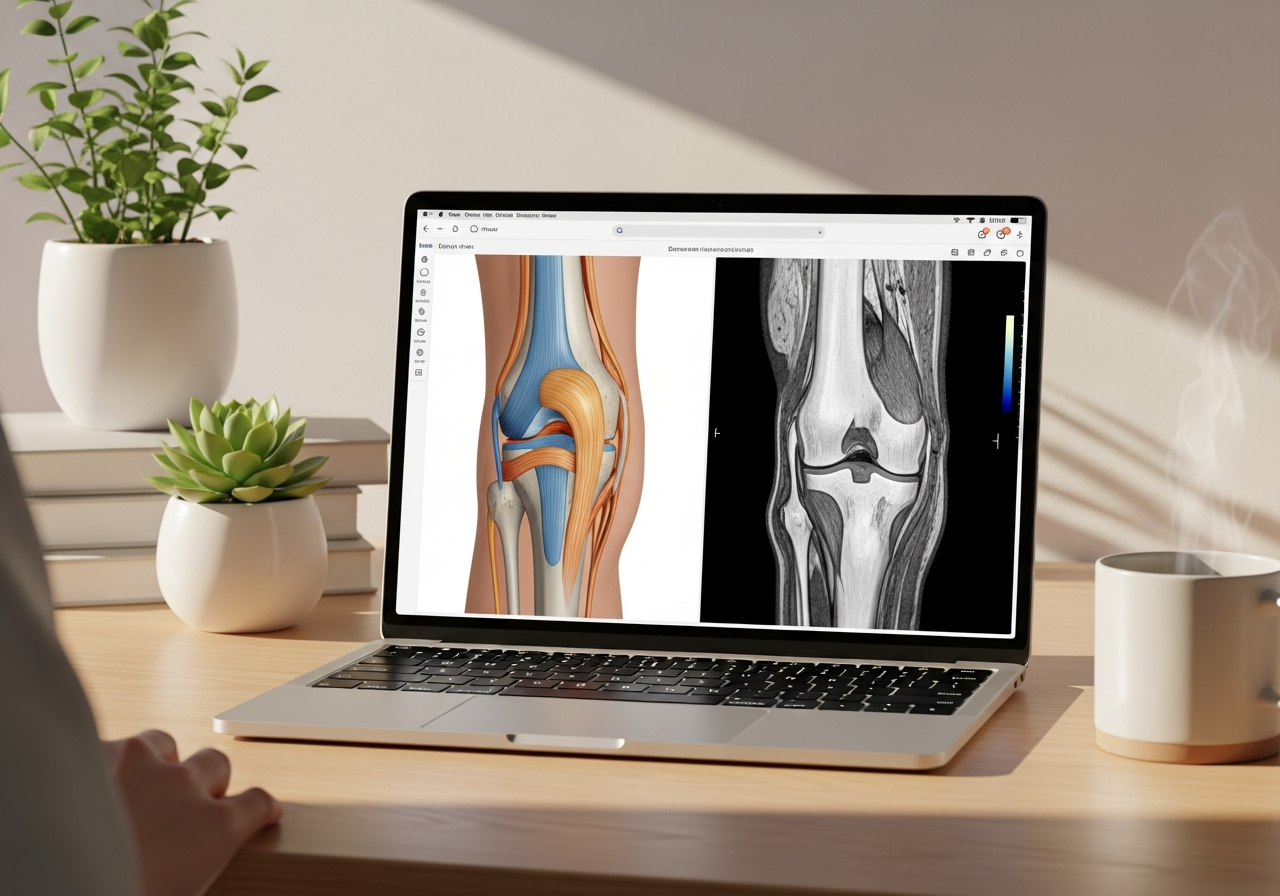
- Correlation with real images: This is its crown jewel. It allows you to compare 3D models side-by-side with images from cadaver dissections, magnetic resonance imaging (MRI), and computed tomography (CT) scans. This is pure gold for preparing for practical exams.
- Pricing model: Traditionally, its big advantage has been offering a one-time payment license. You pay once, and the app is yours forever for that version. Although they have introduced subscription models for institutions, the one-time purchase option for students remains a huge draw.
- Very complete: It doesn't fall short on detail. You get all the systems, animations, and a huge amount of information, although it might not reach the micro-level of Complete Anatomy.
The not-so-good:
- Less in-depth microanatomy: While you can view histology, it doesn't have the super-specialized focus on microscopic detail that its competitor has.
- Slightly more classic interface: It works perfectly, but some users might feel that the Complete Anatomy interface is a bit more modern or fluid.
Visualizing anatomy in 3D is just the first step. Then you have to nail that information into your memory for the exam. Once you understand the structure of the deltoid or the path of the sciatic nerve, you need to test yourself.
Smartests.app helps you right at that point. Upload your anatomy notes, and we'll generate multiple-choice tests for you in seconds so you can check if you've really understood it. It's the fastest way to go from "seeing" to "knowing."
What if my budget is zero? Free alternatives that get the job done
Not everyone can or wants to spend money on an app, and that's totally understandable! Luckily, there are free options that, while not as comprehensive, are good enough for quick lookups or for getting started.
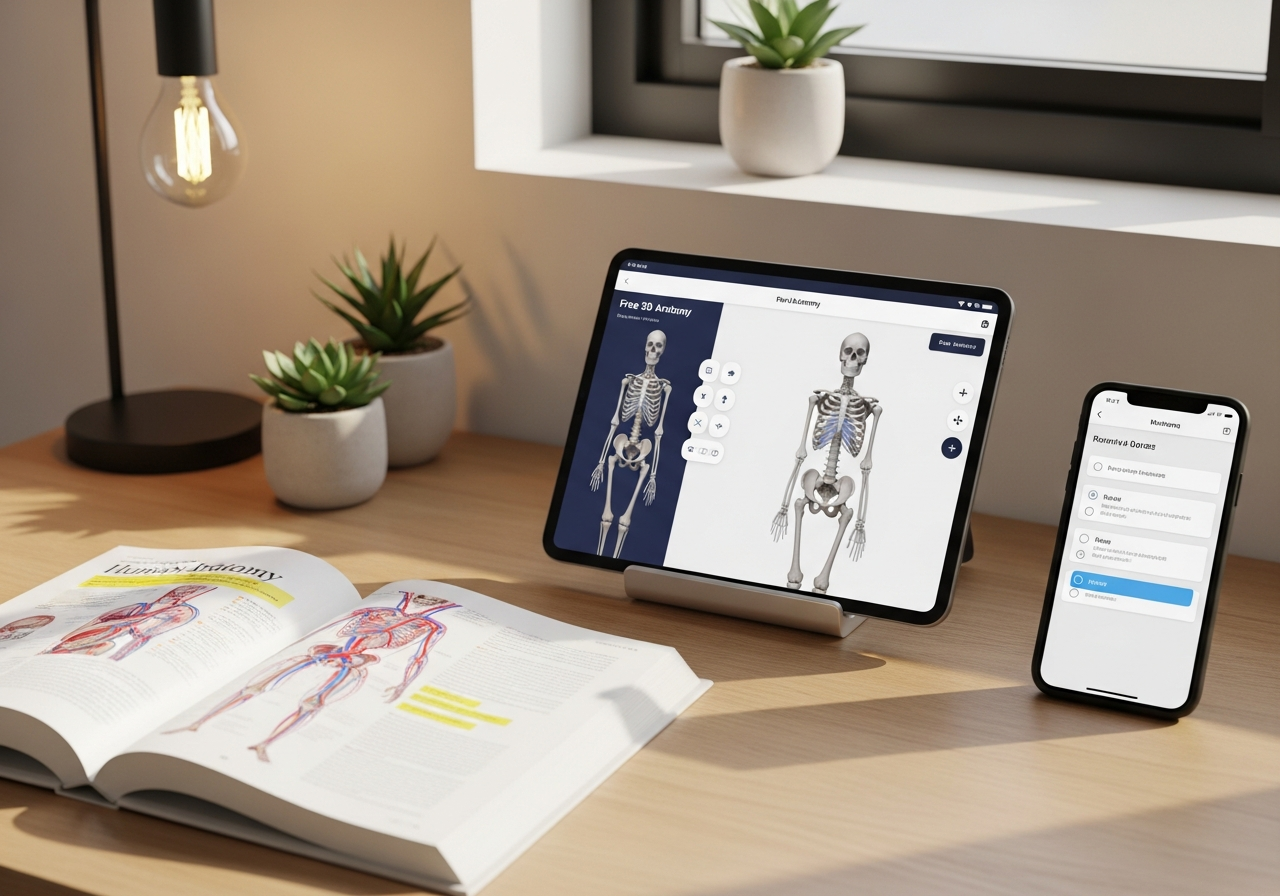
- Anatomy Learning - 3D Atlas: Probably the best free option. It offers fairly detailed 3D models, the ability to add labels, and simple quizzes. It's more than enough to get a general idea of the structures.
- BioDigital Human: It works on a "freemium" model. The free version is surprisingly powerful and lets you explore the human body in quite a bit of detail. Some advanced features are locked, but for basic use, it's fantastic.
The bottom line on free apps? They are a great support tool. Use them to quickly visualize something or if you're just starting out. But if anatomy is a core subject in your degree, investing in one of the paid apps can save you countless hours of study and frustration.
Quick Summary: Your Ideal Anatomy Atlas
So you don't get lost, here's a summary of everything we've talked about:
- If you're looking for MAXIMUM detail: Do you need to see microanatomy, histology, and have access to courses and videos from experts? Complete Anatomy is your choice, as long as you don't mind the subscription model.
- If you value PRACTICAL application: Do you want to compare 3D models with cadaver images and MRIs to prepare for your practical exams? Human Anatomy Atlas is probably better for you, and its one-time payment model is a plus.
- If you're on a TIGHT BUDGET: Start with Anatomy Learning or the free version of BioDigital Human. They are excellent tools for visualizing the basics without spending a dime.
- Final advice: The best app is the one you actually use. Many offer free trials or limited versions. Try them out and decide which one best fits your way of studying.
Go From Visualizing to Truly Memorizing
A 3D atlas gives you the "what" and the "where," but to pass your exams, you need to burn it into your memory. The best way to do that is through active recall, constantly testing yourself.
Smartests.app is designed for just that. It turns your boring anatomy notes (or notes from any subject) into interactive multiple-choice tests in seconds. It's the most efficient way to reinforce what you learn and walk into the exam with confidence.