
How Much Does a Master's Degree in Spain Cost? The Ultimate Guide So You Don't Get Lost

You finish your degree and the big question pops into your head: "Now what?". One of the most popular routes is to get a master's degree to specialize, improve your resume, and hopefully, access better job opportunities.
But of course, then comes the second big question: "And how much is this whole thing going to cost me?".
Don't worry, you're not alone in this. The price of a master's degree in Spain can be a real maze. It varies a lot depending on the type of master's, the university, and even the autonomous community where you study. In this post, we're going to break it all down so you have a clear picture.
Types of Master's Degrees: Not All Are Created Equal (or Cost the Same)
The first thing you need to understand is that there are different "categories" of master's degrees. Their price and official recognition depend on this.
1. Official Master's Degrees (Public Universities)
These are the "standard" master's degrees, so to speak. They are regulated by the Ministry of Education and verified by ANECA (National Agency for Quality Assessment and Accreditation). These are the ones that give you access to a doctorate.
Their price is public and is set per ECTS credit (a master's degree usually has 60 ECTS). This is where the autonomous community comes into play, because each one sets its own prices.
- The price range: It can go from around €17 per credit in the cheapest communities (like Galicia or Andalusia) to over €45 per credit in others (like Catalonia or Madrid).
- Quick calculation: A 60 ECTS master's degree could cost you from around €1,000 in the best-case scenario, to nearly €3,000 or more at a public university in a big city.
The key here is to research the price per credit in the autonomous community you're interested in. The difference can be double or triple!
2. University-Specific Master's Degrees (Títulos Propios)
These are designed and accredited by the universities themselves (public or private). They usually have a much more practical and specialized focus, designed to connect directly with the professional world. They do not grant access to a doctorate.
Since they are not regulated by the state, the prices are not fixed and are quite a bit higher.
- The price range: The range here is huge. You can find university-specific degrees from €3,000 to €15,000 or more. It completely depends on the university, the prestige of the master's, and the area of knowledge.
3. Master's Degrees at Business Schools and Private Institutions
This is the top league in terms of price. We're talking about private institutions like IE, ESADE, IESE, etc. Their great added value is usually prestige, contacts (networking), and a very strong job placement service. MBAs (Master in Business Administration) are the star product here.
- The price range: Get ready. They range from €15,000 to €70,000 or even more. It's a very large investment, designed for profiles looking for a huge qualitative leap in their professional career.
The Price Isn't Just Tuition: The Hidden Costs
Okay, so you have an idea of the tuition price. But what about everything else? Living for a year in a new city is a huge expense that you have to add to the equation.
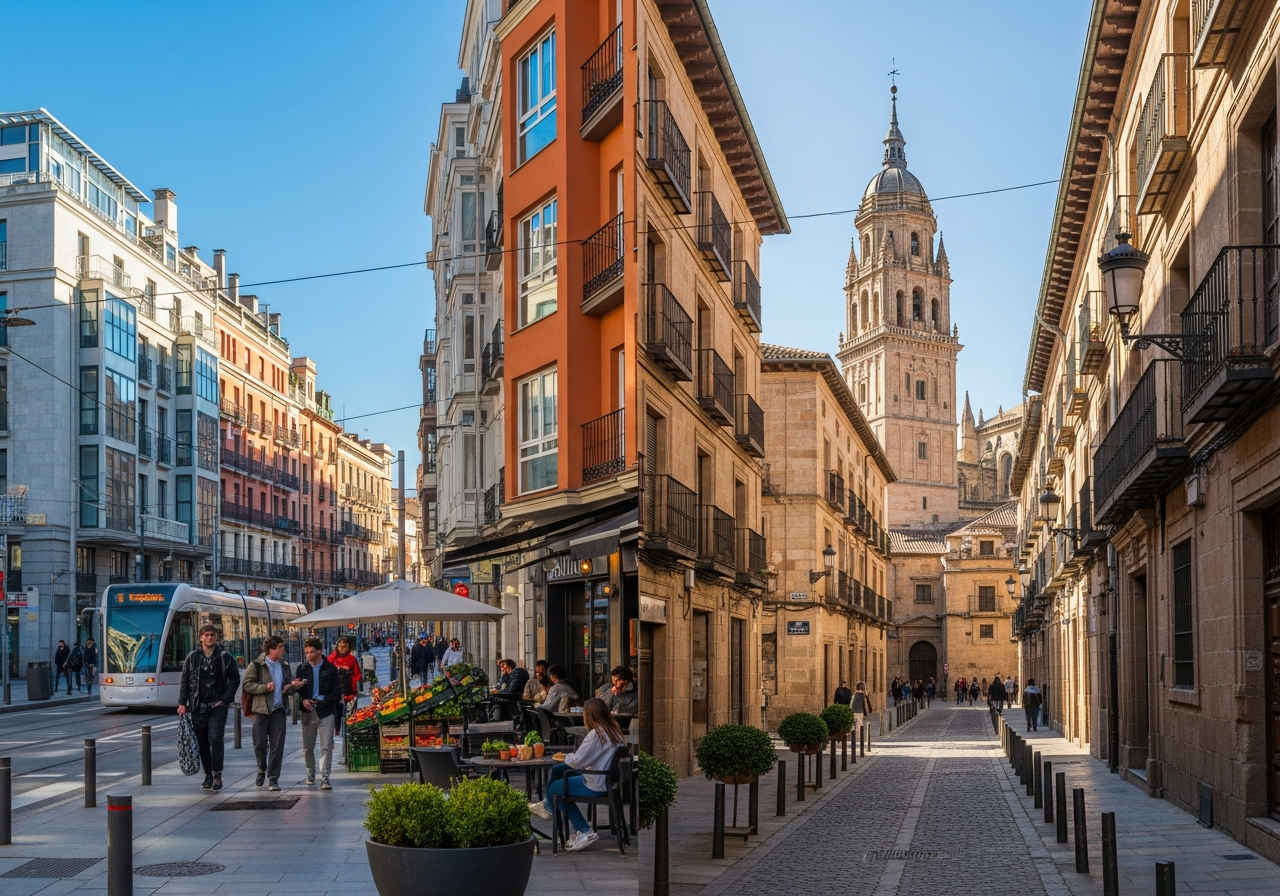
- Accommodation: The biggest part of your budget will go here. Paying rent in Madrid or Barcelona (which can be over €500 for a room) is not the same as in Granada, Salamanca, or Santiago de Compostela (where you can find options for €250-350).
- Living expenses: Food, bills, leisure... Budget at least €300-400 per month.
- Materials: Books, photocopies, specific software... It's not a fortune, but it adds up.
- Transportation: The public transport pass is another fixed monthly expense.
- Administrative fees: Paying for pre-registration, enrollment, or the issuance of the degree are small "tolls" that also count.
The moral of the story: A €1,500 master's in Madrid can end up costing you much more than a €3,000 one in a cheaper city if you have to move. Do the math carefully!
How Do You Get into a Master's Program? The Admission Process
You know how much it costs, now let's see how to get in. The process varies, but almost all programs will ask for a combination of the following:
- Bachelor's Degree: Obviously, you need to have a finished degree (or be about to finish it).
- Academic record: Your GPA is, in many cases, the most important factor, especially for public master's programs with high demand.
- CV/Resume: Professional experience, volunteering, languages... anything that makes you stand out.
- Letter of motivation: A written statement where you explain why you want to do that master's and why you are the ideal candidate. Put some effort into it!
- Language proficiency: If the master's is in English or is bilingual, they will ask for an official certificate (like B2 or C1).
- Personal interview: This is more common in private and university-specific master's programs. They want to get to know you and see if your profile is a good fit.
Once you're in, the real challenge begins: passing. The level of demand increases and the volume of notes can be overwhelming. Managing your time and your study methods well is essential to make the investment worthwhile.
This is where a good tool can be a game-changer. Smartests.app helps you transform those endless PDFs and documents into multiple-choice tests in seconds. This way you can test yourself, identify your weak points, and actively memorize without wasting hours.
Pros and Cons of Doing a Master's Degree
To finish up, let's be honest. Is the effort and money worth it?
Pros 👍
- Specialization: You become an expert in a specific area.
- Better opportunities: You get access to job offers that require that qualification.
- Networking: You meet professors and classmates who can be key contacts in your future.
- Access to a doctorate: Essential if you're interested in research (only with official master's degrees).
Cons 👎
- The financial investment: It's a significant outlay of money.
- The opportunity cost: It's one or two years that you're not working and gaining experience (and a salary).
- It's not a guarantee of success: A master's degree helps, but it doesn't guarantee you a job 100%.
- The study load: Be prepared to work hard.
Quick Summary
If you got lost in all the data, here's the essential info:
- Official Public Master's: The cheapest option. The price is set by the Autonomous Community and ranges from approx. €1,000 to €3,000. It gives you access to a doctorate.
- University-Specific Master's: More expensive (€3,000-€15,000) and with a very practical focus. Does not grant access to a doctorate.
- Private Master's / Business School: The biggest investment (€15,000 to €70,000+), focused on prestige and contacts.
- Don't forget living costs: Rent and living expenses can double the total cost of the master's.
- Admission is key: A good GPA, a complete CV, and a strong letter of motivation are your best weapons to get in.
Ready for the Next Level? Study Smart
Doing a master's is a big bet on your future. To make that investment of time and money really pay off, you need the best study tools at your disposal. Don't let the syllabus overwhelm you.
With Smartests.app, you can turn your notes into interactive tests to study more efficiently and actively. Prepare better, save time, and ensure success in your master's program.