
How Much Does a Master's Degree Cost in Spain in 2026: A Complete Guide to Prices and Scholarships

Thinking about doing a master's degree? Awesome! It's an incredible step to specialize and give your career a boost. But I'm sure there's one question nagging at you and keeping you up at night: how much does a master's degree cost in Spain?
The short answer is: it depends. But don't worry, we're not going to leave you hanging. In this post, we'll break down all the factors that influence the price, give you realistic figures to get an idea for 2026, and most importantly, tell you how to get scholarships and financial aid so that money isn't a barrier.
Let's get to it!
The Big Dilemma: Public or Private University?
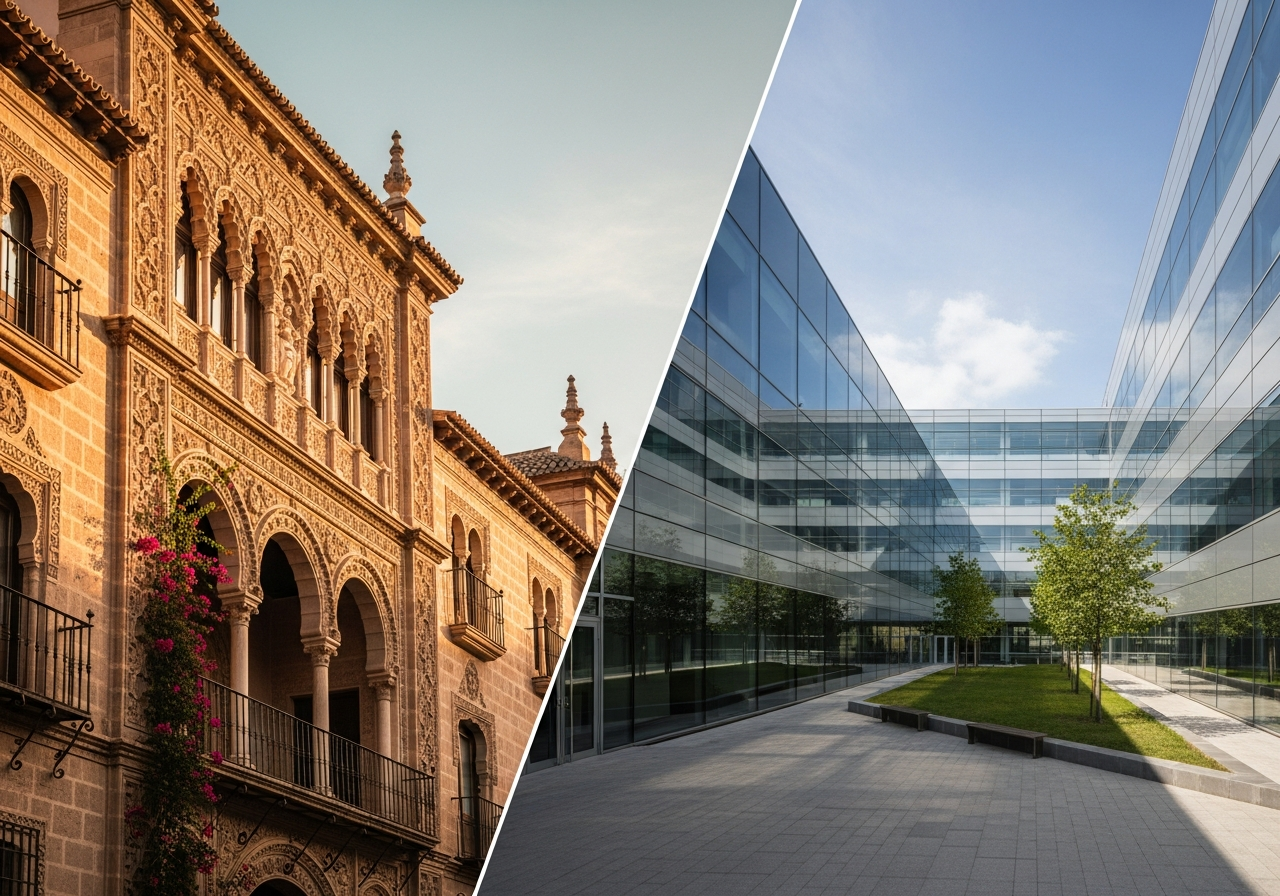
The first and biggest price difference is determined by the type of university you choose. The numbers change drastically here.
Master's Degree at a Public University
At public universities, prices are set by each Autonomous Community, within limits established by the government. It's not a single price, but a "range."
- Average price: Generally, a public master's degree of 60 ECTS credits (one academic year) can cost between €800 and €3,500.
The variation depends on many factors we'll look at now, but as you can see, it's a much more affordable option. The quality of education is excellent, and many of the country's best universities are public.
Master's Degree at a Private University
Here, the picture is different. Private universities and business schools set their own prices. They have complete freedom, and the figures skyrocket.
- Average price: A master's degree at a private institution can range from €5,000 to over €25,000. MBAs at prestigious business schools can even exceed €70,000.
Why the difference? It's often justified by greater specialization, a stronger networking scene, partnerships with top companies, or more modern facilities.
Factors That Influence the Price of Your Master's Degree
Okay, so we have the first major division. But why does a public master's degree in one city cost €1,000 and €3,000 in another? Pay attention to these factors:
-
The Autonomous Community: This is key! Each autonomous community sets its public prices. Historically, Galicia, Andalusia, or Asturias have had some of the lowest prices, while Catalonia or the Community of Madrid have been at the higher end of the scale. We recommend checking the public price decrees in the BOE (Official State Gazette) or on the official website of the community you're interested in.
-
The Degree of Experimentality: A master's in Humanities doesn't cost the same as one in Health Sciences. Master's degrees are classified by levels of "experimentality" based on the resources they require (labs, special materials, etc.). That's why a master's in engineering or biotechnology will almost always be more expensive than one in art history.
-
Qualifying vs. Non-Qualifying Master's: A qualifying master's degree (máster habilitante) is one that is mandatory to practice a regulated profession (like a lawyer, architect, or high school teacher). At public universities, these master's degrees usually have more controlled and affordable prices. Non-qualifying ones, which are for specialization, have more pricing freedom.
-
If you are a national/EU or non-EU student: Prices for students from outside the European Union are usually higher at public universities, as part of their tuition is not subsidized. Watch out for this if you're coming from Latin America!
It's Not All About Paying! Let's Talk About Scholarships and Financial Aid
Now for the part we like best. Just because a master's degree costs a certain amount doesn't mean you have to pay for it all out of your own pocket. There are tons of aid options available; you just have to look for them.
-
Ministry of Education (MEFP) Scholarships: These are the best-known and most sought-after. They cover the full tuition fee and may include a fixed or variable amount for living expenses, transportation, and materials. The main requirements are academic and financial. Check their official website and don't miss the deadlines!
-
Autonomous Community Scholarships: In addition to the general scholarship, many regions offer their own complementary aid. Search for "master's scholarships" followed by the name of your community (e.g., "Becas Talentia" in Andalusia, "Becas AGAUR" in Catalonia).
-
University-Specific Scholarships: Many universities have their own scholarship programs to reward academic excellence, help students with limited resources, or attract international talent. Take a look at the "Scholarships and Aid" section on the website of the university you're interested in.
-
Private Scholarships: Major foundations like Fundación "la Caixa" or Becas Santander offer very prestigious and well-funded programs. They are usually very competitive, but it's worth a shot.
-
If you're a Latin American student: The Fundación Carolina is your great ally. It offers hundreds of scholarships every year for postgraduate studies in Spain.
Once you have the funding sorted out, it's time for the most important part: studying and getting great grades. And for that, the key is to optimize your time and make sure you're really understanding the material.
This is where Smartests.app comes in. Our tool transforms your master's degree notes into multiple-choice tests in seconds. It's the perfect way to test your knowledge, identify gaps, and go into your exams with total confidence.
Price Projection for 2026: What Can We Expect?
Predicting the future is impossible, but based on trends from recent years, we can make a reasonable estimate.
-
Public universities: The general trend has been to stabilize or even slightly reduce tuition fees to facilitate access to higher education. No drastic increases are expected. Prices will most likely remain similar to current ones, with possible adjustments for inflation.
-
Private universities: Here, the trend is upward. Private institutions usually update their fees annually. It's realistic to expect a moderate increase of between 2% and 5% per year.
Our advice: Use the figures in this post as a good guide, but always check official sources (like Universidades.es or the autonomous community's portal) the year before you plan to enroll to get the exact data.
Quick Summary
If you got lost in all the numbers, here are the key takeaways:
- The cost varies a lot: There's no single price for a master's degree in Spain.
- Public vs. Private: The difference is huge. Public universities range from €800 - €3,500, while private ones start at €5,000 and can exceed €25,000.
- Key factors: The Autonomous Community, the type of master's (sciences or humanities), and whether it's a qualifying degree or not are the factors that most influence the price.
- There are many scholarships: From the general ones from the Ministry (MEFP) to regional ones, those from the universities themselves, or from private foundations. Do your research and apply for as many as you can!
- 2026 forecast: We expect stable prices at public universities and slight increases at private ones.
Prepare for Your Master's Exams the Smart Way
A master's degree is demanding, and your time is precious. Don't waste it just memorizing. Make sure you master each topic and show up ready to succeed.
Smartests.app helps you do just that. Upload your notes, generate unlimited tests, and turn studying into an active and much more effective process.