
YouTube for Physiology and Pathology: The Must-Watch Channels That Will Save Your Semester
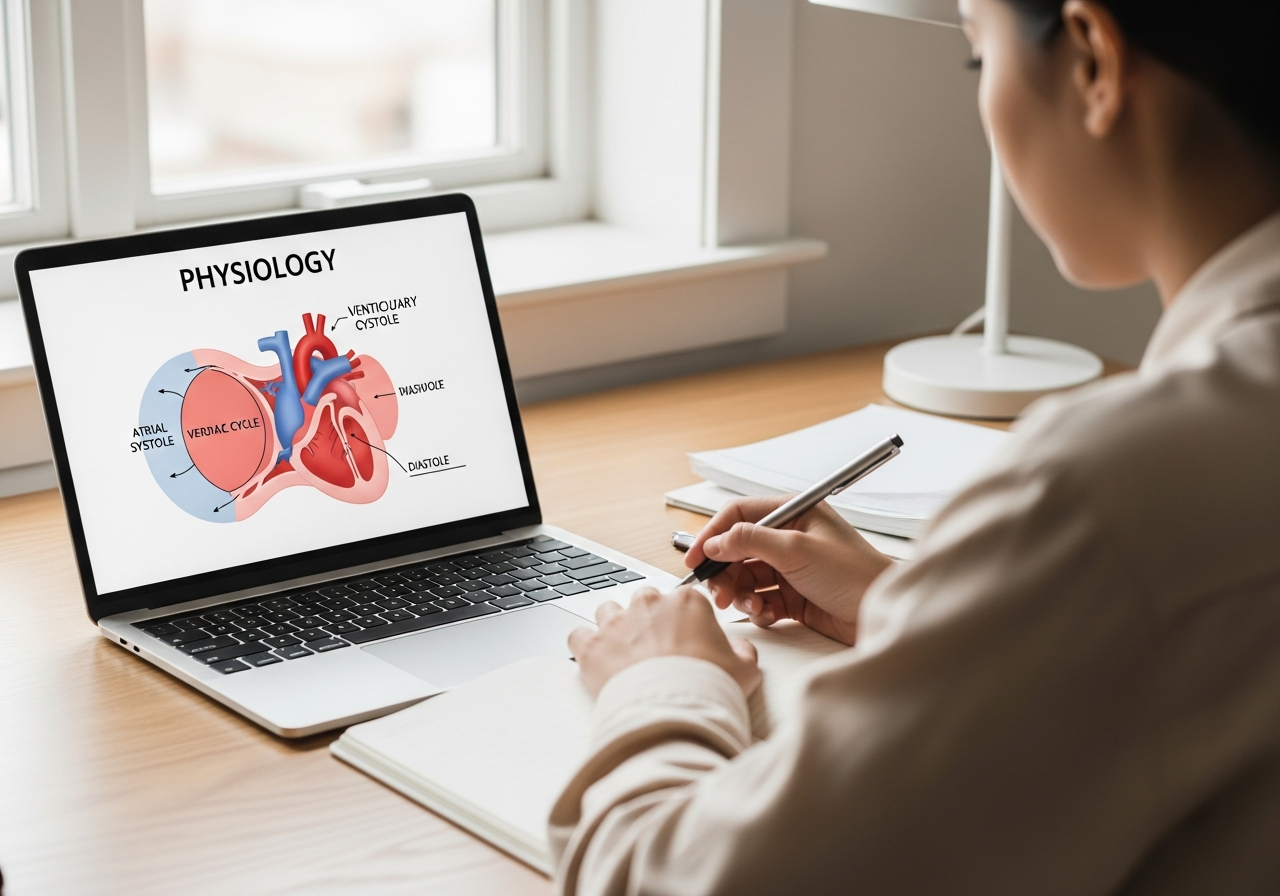
Physiology and Pathology. Just reading those names makes many of us break out in a cold sweat. They're fascinating subjects, but also incredibly dense. You spend hours in front of a book trying to visualize the cardiac cycle or figure out what the heck is going on in the nephron, and sometimes, it just doesn't sink in.
The good news? You're not alone in this. And the best part is that the solution might be just a click away, for free, on YouTube. The problem is, there are thousands of channels, and not all of them are worth your time.
To save you hours of searching, we've done the work for you. We've looked for the channels that students themselves recommend in the comments with phrases like "this saved me on the exam." Here's a selection of the best ones, categorized by your learning style.
What's Your Style? Choose Your Ideal Channel
We don't all learn the same way. Some of us need to see things in motion, others prefer someone to draw a step-by-step diagram, and some need a two-hour masterclass to understand everything in depth. Identify your style and choose your weapon.
For the Visual Learner: Osmosis.org
If you're the type who needs to see clear, direct animations for concepts to stick, Osmosis is your channel.
Their videos are famous for their visual quality. They use clean, colorful animations to break down the most complex processes into simple steps. Does the renin-angiotensin-aldosterone system seem like a tongue twister? Look it up on Osmosis. In 10 minutes, you'll have it crystal clear.
- Style: High-quality, well-structured visual animations.
- Best for: Understanding complex pathophysiological processes quickly and visually.
- Language: English, but here's the best part: they have very high-quality Spanish subtitles, reviewed by professionals.
- Updates: The content is constantly updated and aligned with clinical guidelines.
For the Diagram Lover: Armando Hasudungan
Do you spend your classes drawing arrows and diagrams in your notes to connect ideas? Then you're going to love Armando Hasudungan's style.
Armando literally draws physiology for you on a digital whiteboard. You see how the diagram is created from scratch and how each part connects to the previous one. It's like having that classmate who's great at drawing explain the topic to you. His videos on the nephron or the coagulation cascade are legendary. He helps you build the mental map in real time.
- Style: Freehand drawings on a digital whiteboard, explaining step-by-step.
- Best for: Connecting concepts, understanding metabolic pathways, and seeing the "big picture."
- Language: English. The subtitles are usually auto-generated, so their reliability can vary.
- Updates: He focuses on fundamental concepts that are timeless, so the content is very solid.
Watching one of Armando's videos and finally understanding how everything works is an incredible feeling. But how do you make sure you've actually retained it for the exam? This is where active practice comes into play.
Smartests.app takes those notes you've completed with the video's diagrams and turns them into multiple-choice tests in seconds. It's the perfect way to check if you've truly mastered the topic or if it just sounded good while you were watching.
For Those Who Need a Masterclass: Dr. Najeeb Lectures
If you're the type who thinks, "10 minutes isn't enough for me, I need EVERYTHING explained from the ground up," then Dr. Najeeb is your guy.
His lectures are... long. Very long. But also incredibly detailed. Dr. Najeeb stands in front of a whiteboard and doesn't stop until he's explained the very last 'why' of every concept. He's perfect for those topics you're stuck on and need a total deep dive. His neuroanatomy and cardiology lectures are pure gold.
- Style: Traditional masterclasses, long and very in-depth.
- Best for: When you need a solid foundation and a comprehensive understanding of a difficult topic.
- Language: English, with a distinctive accent. Requires a good listening level. Subtitles are usually auto-generated.
- Updates: Like Armando, he focuses on fundamental science, which is the basis of everything and doesn't change.
Quick Summary
Don't have time? Here's the cheat sheet:
- If you're a visual learner and want to get straight to the point: Start with Osmosis. Short videos, spectacular animations, and reliable Spanish subtitles.
- If you need to draw and connect ideas: Your channel is Armando Hasudungan. You'll see how knowledge is built through diagrams.
- If a topic is giving you a hard time and you need depth: Dedicate some time to a lecture from Dr. Najeeb. It's a time investment that's well worth it.
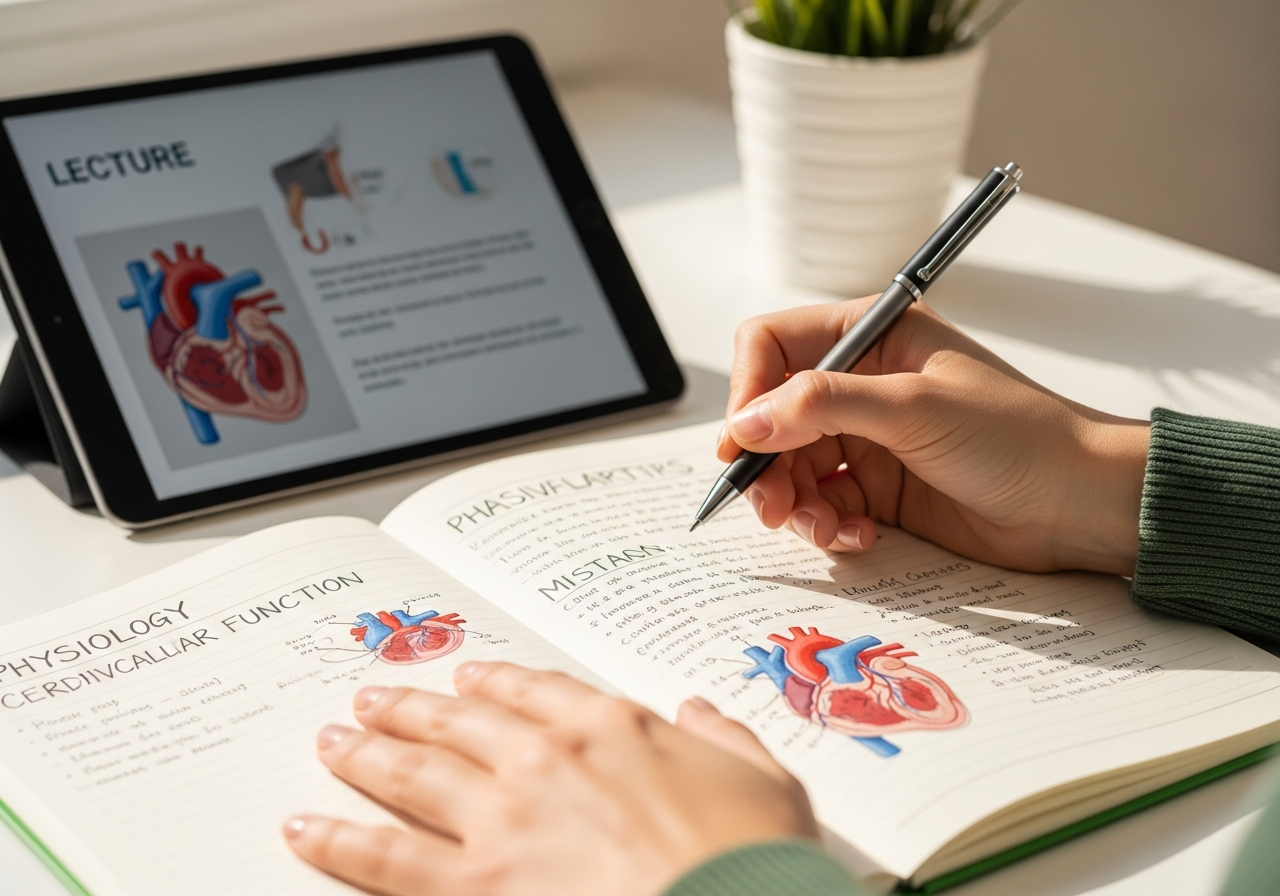
Combining these resources with your class notes is a winning strategy. You don't have to stick to just one; use them depending on the topic and what you need at the moment.
Turn These Lectures into Exam Questions
Watching videos is great for understanding, but the key to passing is active practice. After watching a video and completing your notes, the next step is to test your knowledge.
That's where Smartests helps. Upload your notes (the ones you just improved thanks to YouTube), and our AI will instantly create a multiple-choice test so you can practice, identify your weak spots, and walk into the real exam with total confidence.