
The 7 Best AI Tools for Medical Students in 2026
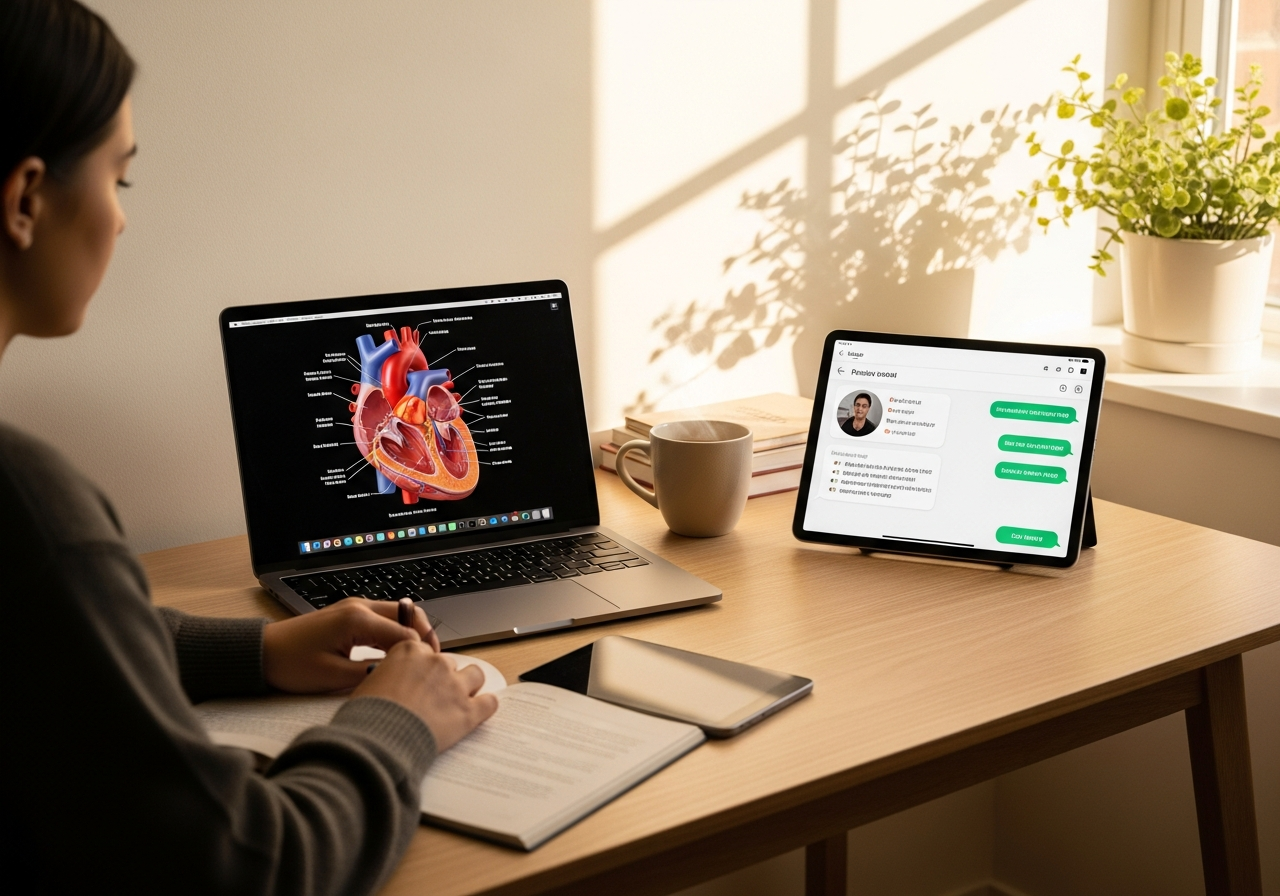
Let's be honest: med school is like trying to drink from a fire hose. The amount of information is brutal, and the old-school study methods sometimes just don't cut it.
The good news is that artificial intelligence is no longer science fiction. It's a reality that can help you study smarter, not harder. But with so many new tools coming out every day, which ones are actually worth it and won't waste your time?
You won't find a generic list here. I'm bringing you a curated selection for 2026, designed for the real needs of a medical student: from understanding complex concepts to preparing for the MIR. Let's get straight to it.
1. The Generalist: ChatGPT-4o / Claude 3 Opus
Let's start with the obvious, because it's still essential. Think of them as your personal 24/7 tutor who never gets tired of your questions.
- What to use it for: To simplify complex topics. Ask it to explain the pathophysiology of septic shock as if you were talking to a patient, or to create an analogy to remember the Krebs cycle. It's also great for generating mnemonics on the fly.
- Price: Both have very powerful free versions. The paid versions (around $20/month) give you access to the most advanced models, which are usually more accurate and faster.
- Does it hallucinate?: Yes, and be very careful with this. Never trust an answer 100% for clinical data. Use it to understand concepts, not to memorize doses or specific facts without verification.
- Learning curve: Practically zero. If you know how to chat, you know how to use it.
2. The Fact-Checker: Perplexity AI
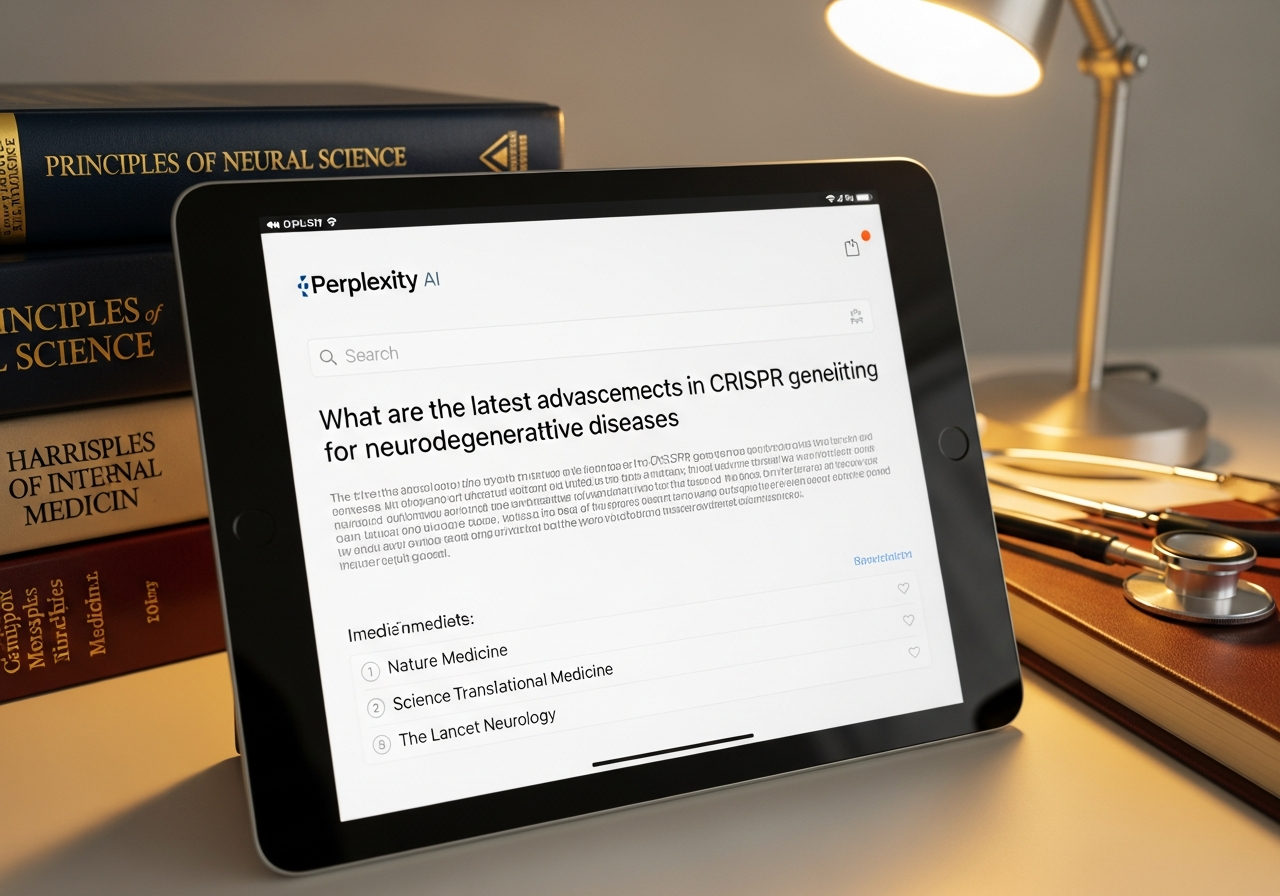
Perplexity is the answer to ChatGPT's biggest weakness: the lack of sources. It's a conversational engine that cites its sources in every answer.
- What to use it for: When you need a quick but backed-up explanation. It's perfect for the early stages of researching a topic or for verifying a fact you heard in class. For example: "What are the latest AHA guidelines on cardiopulmonary resuscitation?". It will give you the answer and the links to the official documents.
- Price: The free version is excellent. The Pro version (around $20/month) lets you upload files and use more powerful models like GPT-4o or Claude 3.
- Does it hallucinate?: Much less, because it's based on real sources you can check. The risk is low, but as always in medicine, verify the primary source.
- Learning curve: Very low. It's like using a search engine, but better.
Do you understand the theory but can't retain it?
You've used ChatGPT to understand the nephron and Perplexity to find the latest hypertension guidelines. Great. But how do you make sure all that information sticks in your head for exam day?
The key is active recall. Instead of rereading, you have to force your brain to remember the information. And the best way to do that is with multiple-choice tests. Smartests.app takes your notes, summaries, or PDFs and turns them into a multiple-choice test in seconds, so you can test yourself instantly.
3. The Researcher: Consensus
If Perplexity is a search engine with sources, Consensus is your personal research assistant. You ask it a question in natural language, and it answers by extracting conclusions directly from scientific papers.
- What to use it for: To find real scientific evidence without having to read 20 abstracts. Ideal for final degree projects, presentations, or simply to answer a clinical question based on evidence. Ask it: "Does metformin affect longevity in non-diabetic patients?".
- Price: It has a limited free version. The Premium plan (around $12/month) is very affordable and gives you unlimited searches and access to more features.
- Does it hallucinate?: Practically not, because its answers are based directly on the text of published studies. It shows you the exact excerpt where it draws the conclusion from.
- Learning curve: Very easy. It's just a simple search bar.
4. The Clinical Intern: Glass Health
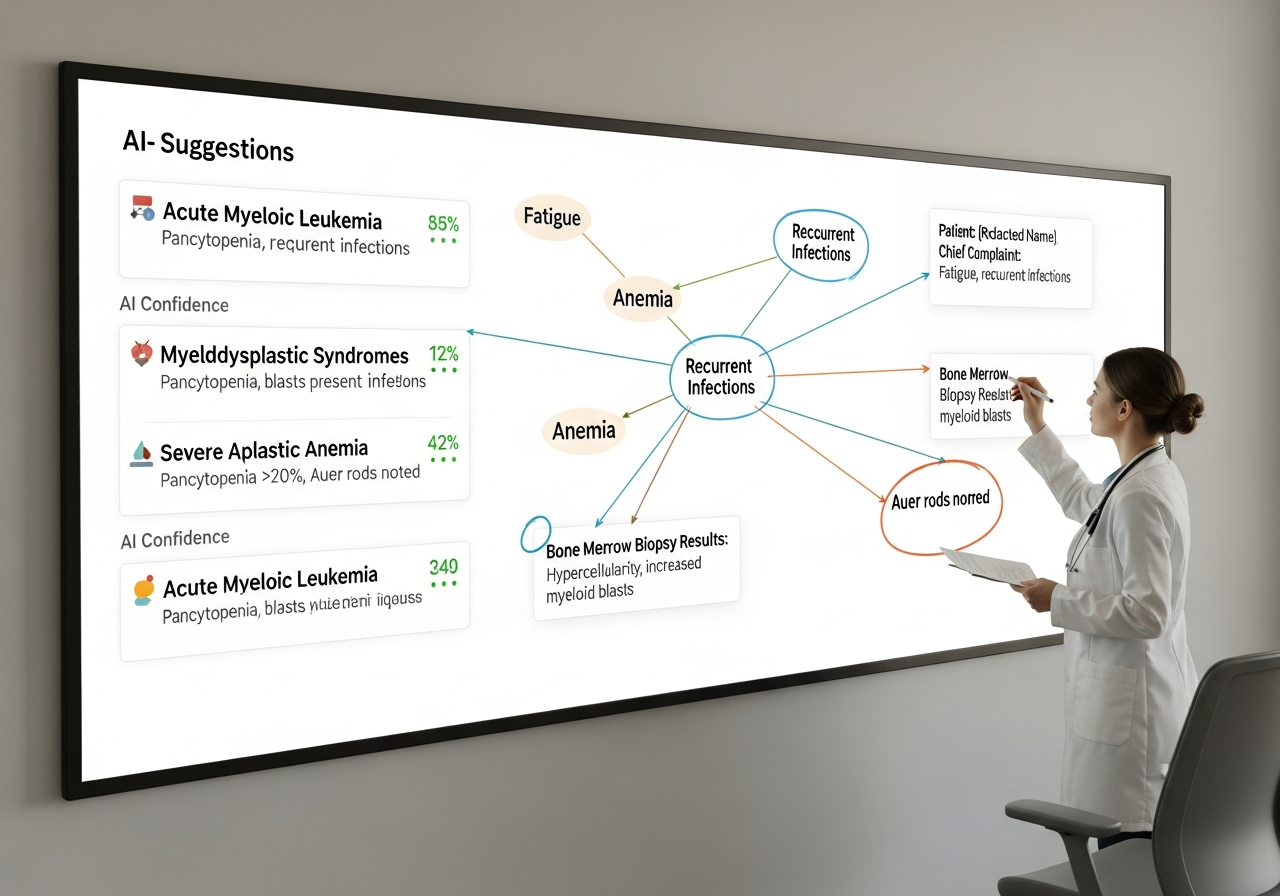
This is possibly the most "medical" tool on the list. Glass Health is a differential diagnosis (DDx) assistant designed by doctors to help with clinical reasoning.
- What to use it for: To learn, not to diagnose. You enter a patient's symptoms, signs, and data (from a clinical case, never a real patient!) and the AI helps you build a differential diagnosis, explaining its reasoning. It's like having a senior resident guiding your thought process.
- Price: It has a free plan. The Pro version, Glass Pro, is more expensive and aimed at professionals.
- Does it hallucinate?: The risk is inherent in clinical reasoning, but it's designed to minimize it and be transparent. We repeat: it's a learning tool.
- Learning curve: Medium. You need a clinical foundation to get the most out of it and understand what it's proposing.
5. The Test Creator: Smartests.app
Okay, we're a bit biased here, but for good reason. You've spent hours creating amazing notes. Now what? Reread them a thousand times? Neuroscience says the best way to memorize is to test yourself.
- What to use it for: To turn any document (class notes, a PDF, an article) into a multiple-choice test in seconds. It lets you practice active recall without the tedious work of creating the questions yourself. Ideal for reviewing before a midterm or for the MIR.
- Price: It offers a free plan for you to try and very affordable paid plans for students.
- Does it hallucinate?: No, because it generates questions and answers based solely on the content of your document. It doesn't invent external information.
- Learning curve: Minimal. You upload a file, click a button, and you have your test.
6. The Integrated Ecosystem: Amboss
Amboss isn't just an AI; it's a complete learning platform that has integrated artificial intelligence very cleverly.
- What to use it for: As your command center. Its Qbank (question bank) is one of the best for preparing for the MIR or the USMLE, and its medical library is interconnected. The AI helps by suggesting relevant articles as you answer questions and gives you detailed explanations based on your performance.
- Price: It's a premium tool, with annual subscriptions. Many students consider it a necessary investment.
- Does it hallucinate?: No, its content is created and reviewed by a team of over 150 doctors. It's reliable.
- Learning curve: Medium. It has so many features that it takes a while to master, but it's worth it.
7. The Photographic Memory: Anki (with AI)
Anki is still the king of spaced repetition. It's not an AI in itself, but the combination of Anki with AI is a game-changer.
- What to use it for: For long-term memorization. The new thing? You no longer have to spend hours creating the cards. You can use ChatGPT or specific tools to turn your notes into well-formatted Anki decks in minutes.
- Workflow: Ask ChatGPT: "Create 10 'cloze' deletion flashcards (hidden text) about the adverse effects of corticosteroids from this text, in a format I can import into Anki".
- Price: Anki is free on desktop. The AI you use to generate the cards will have its own cost (often, the free versions are enough).
- Learning curve: Anki's has always been medium-high. The AI part is easy, but configuring Anki to your liking requires a bit of patience.
Quick Summary
If you're short on time, here's the cheat sheet:
- For simple explanations: ChatGPT / Claude.
- For answers with sources: Perplexity.
- For researching papers: Consensus.
- For learning clinical reasoning: Glass Health.
- For creating tests from your notes: Smartests.app.
- For an all-in-one platform: Amboss.
- For long-term memorization: Anki + AI.
Let AI Do the Heavy Lifting
Studying medicine is hard enough already. These tools aren't going to study for you, but they can be the best assistants you've ever had. They automate the most tedious tasks, like finding sources, creating review questions, or simplifying dry topics.
Your job is to understand, reason, and connect ideas. Let the AI handle turning your notes into active study material. That way, you can focus on what really matters: learning to be a great professional.