
Top 5 Free and Open-Source Question Banks (QBanks) to Test Your Knowledge

This probably sounds familiar: you spend hours in front of your notes, highlighting, making outlines... and in the end, you close the book with a huge doubt: do I really know this? Reading and rereading is fine, but it's not enough. Neuroscience confirms it: the most effective way to consolidate what you learn is to test yourself.
This is where question banks, or QBanks, come in. They are the perfect tool for practicing active recall and simulating real exam conditions. The problem is that the most famous options usually cost an arm and a leg.
But don't worry. We've scoured the web to bring you 5 free and open-source alternatives that will help you study smarter without spending a dime.
Why Use a QBank? The Magic of Practice
Before we start, a quick question: why is taking tests so important?
- Identify gaps: You realize what you really don't know, instead of what you think you don't know.
- Learn time management: You get used to the pace and pressure of an exam.
- Understand the format: You become familiar with how questions are phrased and what kind of answers are expected.
In short: taking tests is studying. Now, let's get to it.
The 5 Best Free and Open-Source QBanks
We've selected options that cover everything from the first years of your degree (basic sciences) to the last (clinicals and preparing for exams like the MIR or ENARM).
1. Wikisanidad: The Wikipedia of MIR Questions
If you're in medical school and aiming for the MIR, this is your spot. Wikisanidad is a gigantic collaborative project where thousands of users have uploaded and commented on questions from previous years' exams.
- What makes it great? It's a massive and living database. The best part is the community feedback: below each question, you'll find discussion threads where other students and doctors explain the reasoning behind the correct and incorrect answers. Sometimes, these explanations are true masterclasses.
- Ideal for: Students in clinical sciences (3rd to 6th year) and those preparing for the MIR.
- Access: Completely free and with no registration required.
2. Communities and Forums (CasiMedicos, MIRentrelazados...)
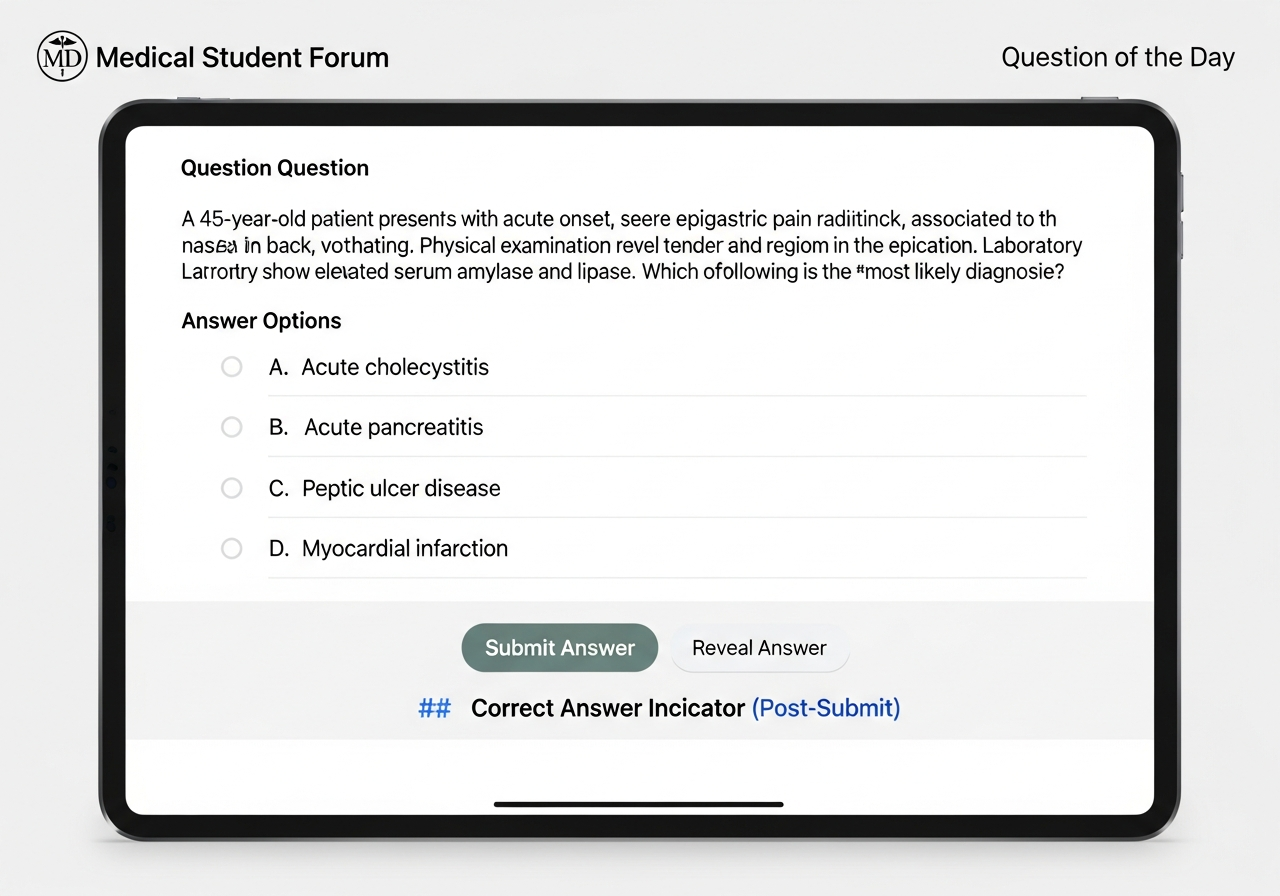
More than a formal QBank, forums are a goldmine of shared resources. Platforms like CasiMedicos or specific threads on other student forums are places where people share exams, individual questions, and doubts.
- What makes them great? You find very specific material and real debates. Someone posts a question from an exam at your university, and suddenly you have 20 people discussing the answer. It's collaborative learning in its purest form.
- Keep in mind: The quality can vary. There isn't always a "professor" to validate the answers, so use it as a supplement and to encourage critical thinking.
- Ideal for: All years. It's just a matter of searching for the threads or subforums for your subject.
- Access: Most are free to access, although some may require free registration to participate.
3. Public University Repositories
Many universities have digital repositories where professors and departments post teaching materials, including past exams. It's not an interactive QBank, but it's a 100% reliable and relevant source of questions for your degree.
- What makes them great? The questions are from real exams, often created by your own professors. It's the most direct way to know what kind of things they usually ask.
- How to find them: Search on Google for terms like "exam repository [your university's name]" or "solved exams department of [subject] [university]".
- Ideal for: Mainly basic sciences (1st and 2nd year), although there's also material for upper-level courses.
- Access: Generally open and with no registration required.
Finding question banks is a great first step, but what about those super-specific topics from your professor that don't appear anywhere? Or that 200-page PDF you have to memorize?
Smartests.app takes your own notes (in PDF, Word, or even a YouTube link) and turns them into a multiple-choice test in seconds. This way, you practice with exactly what you need to know, without wasting time searching.
4. ProMIR (Trial Version)
Okay, ProMIR is a paid platform, but its trial or "demo" version is usually quite generous. It allows you to access a limited number of questions with high-quality explanations.
- What makes it great? It gives you an idea of what a premium QBank is like. The feedback is excellent: each question comes with a detailed explanation, references, and sometimes videos or diagrams. Using the demo is a smart way to access quality content without paying.
- Ideal for: Students in clinical courses who want to try a powerful tool before deciding whether to invest in it.
- Access: Registration required for the free trial.
5. Anki Decks with Multiple-Choice Questions
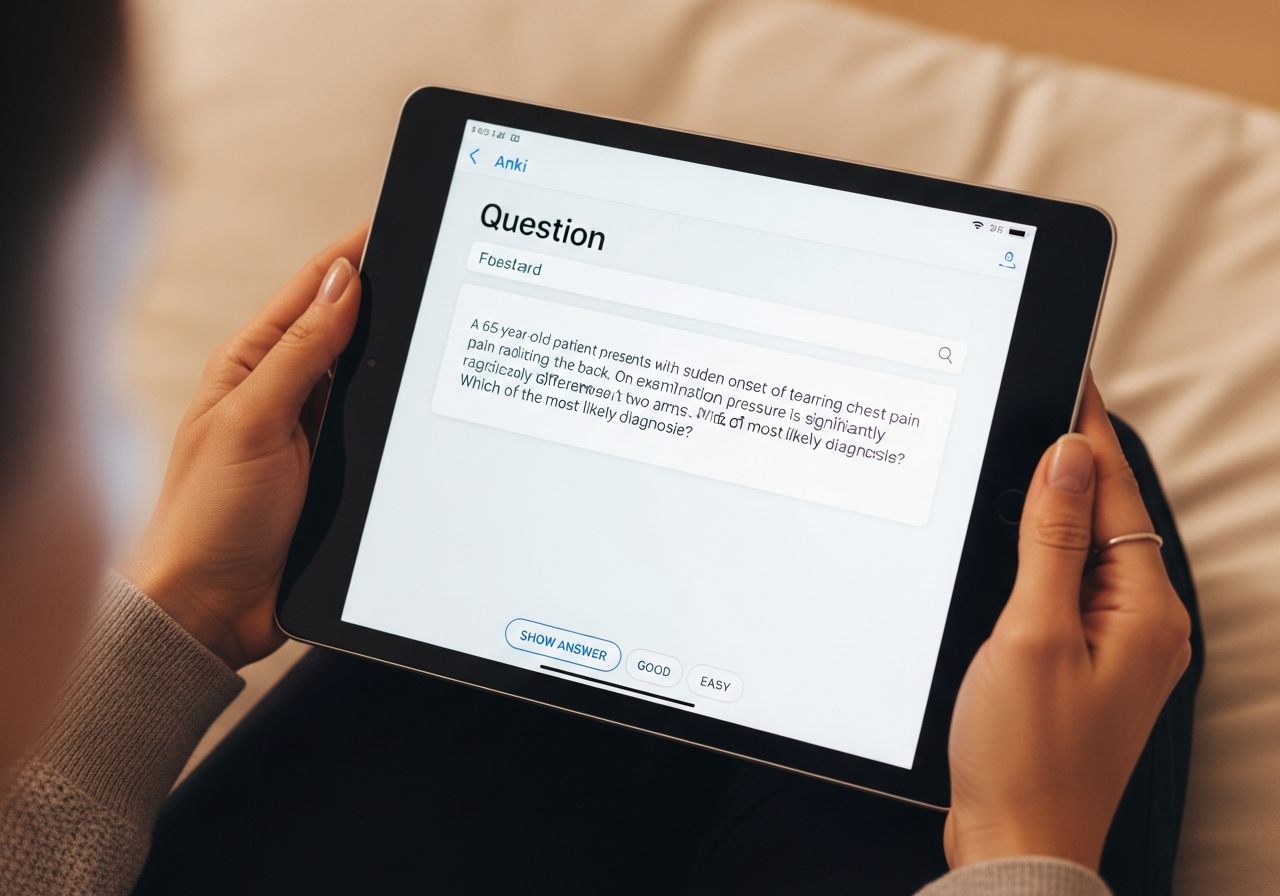
Anki is the king of spaced repetition, but it can also be a very powerful QBank. In the Anki community (especially on Reddit or Telegram), people share decks that aren't just simple "term-definition" flashcards, but are formatted as multiple-choice questions.
- What makes it great? It combines the best of both worlds: the active recall of tests and Anki's spaced repetition, which optimizes when you should review each question so you don't forget it.
- How to find them: Search for "Anki deck [subject] multiple choice" or explore student communities.
- Ideal for: All years, as there are decks for anatomy, physiology, pharmacology, etc.
- Access: Free. You just need to download Anki (which is free on desktop) and the deck.
Quick Summary
If you want to get straight to the point, here's a summary of the best options depending on what you need:
- For the MIR and clinicals: Wikisanidad is your best ally due to its huge database and community comments.
- For specific class material: Dive into student forums and, above all, your university's repositories.
- To test premium quality: Sign up for the trial version of platforms like ProMIR.
- To integrate tests into your review routine: Look for Anki decks formatted as multiple-choice questions.
What if You Created Your Own Tests?
Generic QBanks are a fantastic tool. But the real magic happens when you practice with the exact material that you have to learn. With Smartests.app, you stop depending on other people's questions and start creating your own from your notes, automatically and in seconds.
Upload a PDF, paste in some text or a YouTube link, and let the AI do the work. It's the most personalized and efficient way to test yourself.