
Past Years' Notes and Exams: The Ultimate Guide to Finding Them (Without Losing Your Mind)

Exam week. You can feel the tension in the air. And suddenly, the million-dollar question pops up in every class group chat: "Does anyone have exams from past years?".
That frantic search for quality notes or, even better, solved exams, is a university ritual. They're like a treasure map: they give you clues about which topics are most important to the professor, what kind of questions they usually ask, and ultimately, how to focus your studying to play it safe.
But where can you find these gems? And more importantly, can you trust what you find? Let's break down the best sources and uncover the fine print for each one.
Note-Sharing Platforms: The Student's Grand Bazaar
In recent years, platforms have emerged that are true giants of collaborative note-sharing. The best-known are Wuolah, Dococity, and Studocu. They work like a huge digital library where thousands of students upload and download materials.
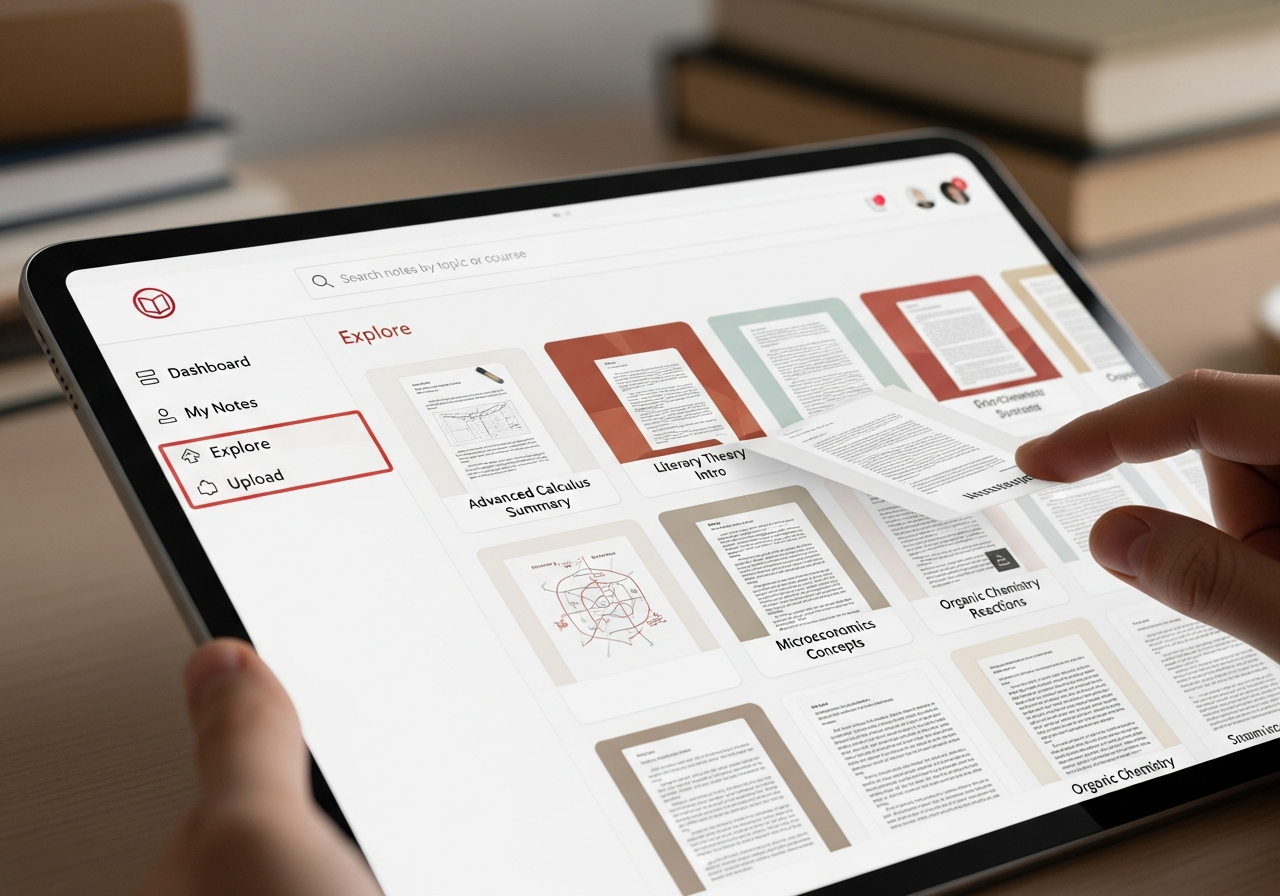
The "Currency": Free or Not-So-Free?
Nothing here is 100% free; there's always a "currency." The good thing is you can choose how you "pay":
- Upload to download: The classic model. You contribute your own notes to the community to earn credits or access to download others' notes. It's the age-old barter system, but digital.
- Watch ads: This is Wuolah's model. You can access notes for free, but in exchange, you'll see ads embedded in the documents. If you're someone who can concentrate easily, this can be a great option.
- Premium Subscription: Platforms like Studocu offer part of their catalog for free, but the most popular documents or solved exams are usually behind a paywall. You pay a monthly or annual fee and get unlimited access.
Quality and Reliability: The Fine Print
This is where you need to be careful. The quality of the material varies wildly. You can find anything from a perfect, typed-out PDF with a clickable table of contents to a collection of blurry, crooked photos with a shadow covering half the page.
And what about solved exams? They're pure gold, but with an important catch: they are solved by other students, not the professor. This means there could be mistakes. Use them as a guide, a reference to understand the format, but never as the absolute truth. Always, always, cross-reference the answers with your own notes.
Facebook and Telegram Groups: The Power of Community
This is the more "guerilla" option, but often the most effective for finding super-specific material. We're talking about groups for your department, your major, or even your specific course.

The good stuff:
- Hyper-specific material: This is where you'll find your professor's exam from last semester. People share exactly what you need for your specific situation.
- It's free: The currency here is collaboration and good vibes. You scratch my back, I'll scratch yours.
- Direct interaction: You can ask questions about a specific exam, and it's likely that someone who already took the course will answer you.
The not-so-good stuff:
- The chaos: Finding a specific file can be like looking for a needle in a haystack. Get ready for some infinite scrolling.
- Unpredictable quality: The variability here is even greater. From class audio recordings to photos snapped in a hurry five minutes before the exam.
Once you have those notes or exams, the next step is to turn them into an active study tool. Because hoarding PDFs is useless if you don't practice with them. This is where Smartests.app comes in.
You upload your notes (yes, even those slightly blurry photos), and our AI transforms them into multiple-choice quizzes so you can truly test yourself. It's the fastest way to go from having the material to mastering it.
The Verdict: What's the Best Option for You?
There's no single answer. The smartest strategy is to combine the best of both worlds:
- Use the platforms (Wuolah, Studocu, etc.) to find complete and well-structured notes for core subjects. They are your study foundation.
- Dive into Telegram and Facebook groups for treasure hunting: that exam from last year, the key questions the professor always repeats, or the notes from that classmate who gets straight A's.
Always remember the golden rule: use others' materials as a supplement, not as your only source. The key is to understand, not just memorize.

Quick Summary: Your Keys to Success
So you don't get lost, here's a summary of the most important points:
- Collaborative platforms (Wuolah, Studocu): Ideal for a broad base of notes. Be prepared to upload material, watch ads, or pay for a subscription.
- Facebook/Telegram groups: Perfect for very specific material (your professor, your year). They're free but disorganized.
- Variable quality: Assume you'll find a bit of everything. A good, typed-out PDF is a treasure.
- Be careful with solved exams! Exams solved by students are a guide, not the bible. Always verify the answers with your notes.
- Study actively: Don't just read. Use the exams to practice and test your knowledge.
Turn Those Notes into Real Knowledge
Finding the notes is just the first step. Smartests.app helps you with the most important one: understanding and retaining the information. Stop hoarding files in a folder and start studying smart.
Transform any document into a custom quiz and see if you've truly mastered the material.